Why Is Phone Charging Needed at Festivals?
Phones now run the whole festival, from tickets to payments to finding your friends. Here is why charging has become basic event infrastructure.


Festivals need phone charging because the phone is now the festival. It is the ticket at the gate, the wallet at the bar, the map between stages, and the only way to find the people you came with. When a phone dies, none of that works, and the guest standing in the middle of your event with a black screen is having a worse time than they will admit in the exit survey.
For a long time charging was treated as a perk. Bring your own cable, find a wall socket, borrow a friend's battery. That made sense when a phone was just for calls and texts. It stopped making sense the moment the whole event moved onto the screen.
The phone became the festival's operating system
Walk through any modern festival and count what the phone is doing. It holds the entry ticket. It pays for food and drinks now that most bars are cashless or card only. It shows the set times and the site map. It is the camera for every photo and video, and the way those get posted while the moment is still happening. It is how people regroup when they lose each other in a crowd of thousands.
Every one of those jobs used to be handled by something else: a paper ticket, cash, a printed programme, a compact camera, a meeting point by the main stage. Now they all live in one device with a battery that was designed for a normal day, not twelve hours in a field.
Phones die faster at festivals than anywhere else
The demand goes up exactly when the battery struggles most. Festival sites usually have weak or overloaded mobile signal, and a phone hunting for a connection burns through power fast. Add heavy camera use, bright screens in daylight, payment apps, and cold nights that sap the battery further, and a full charge that would last all day at home is gone by mid-afternoon.
So the problem is not that people forget to charge. It is that the festival environment drains phones faster than normal life while asking more of them. A guest can do everything right and still hit zero before the headliner. If you are curious about the causes, we broke down why phones die so fast at festivals separately.
A dead phone is an event problem, not just a guest problem
It is tempting to see a flat battery as the guest's own issue. It is not, because the consequences land on the event.
A guest with a dead phone cannot pay, so they stop spending. They cannot find their group, so they leave early. They cannot post the photo or video that would have shown thousands of their followers a good time at your festival, so you lose the free marketing. In the worst case they cannot call for help or reach a lost friend, which turns a battery issue into a safety issue. None of that shows up as a line in a budget, but all of it costs the event something real.
Charging is now expected infrastructure
Water, toilets, and somewhere to sit are all things a festival provides because guests need them and expect them. Phone power has joined that list. People increasingly arrive assuming they will be able to top up, the same way they assume they can refill a water bottle.
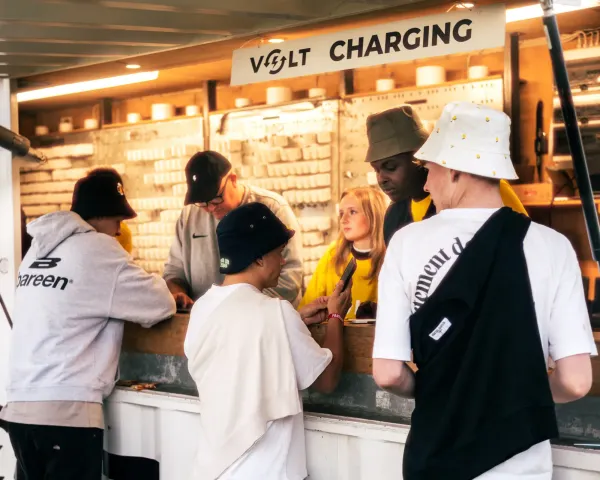
Meeting that expectation does not mean scattering a few wall sockets around. Those get crowded, they tie people to one spot for an hour, and they rarely survive contact with a busy crowd. The practical answer most events land on is rentable powerbanks that a guest picks up, carries around while it charges their phone, and drops back at any point on site. It keeps people moving, spending, and posting instead of sitting on the ground next to a wall.
The takeaway
Phone charging is needed at festivals for the same reason power and water are needed: the event does not really function without it anymore. The phone has absorbed the ticket, the wallet, the map, and the camera, and a dead one quietly costs the event spend, dwell time, and word of mouth. Treating charging as part of the site plan, rather than something guests should have sorted themselves, is simply catching up to how people actually use a festival now.
If you are weighing up how to offer it, a managed powerbank rental service like Volt handles the hardware and the running of it, so charging becomes one less thing your team has to think about on the day.
Volt runs every version of this, self-service, staffed and hand-in, as one setup.
If you are at the stage of choosing how to run it, the full breakdown of the four models and what each needs on site is in the guide to event phone charging stations.