Why is there no charging tent at festivals anymore?
Festival charging tents are largely gone. Here is why swap stations replaced plug-in walls and what it means for charging at your next camping festival.

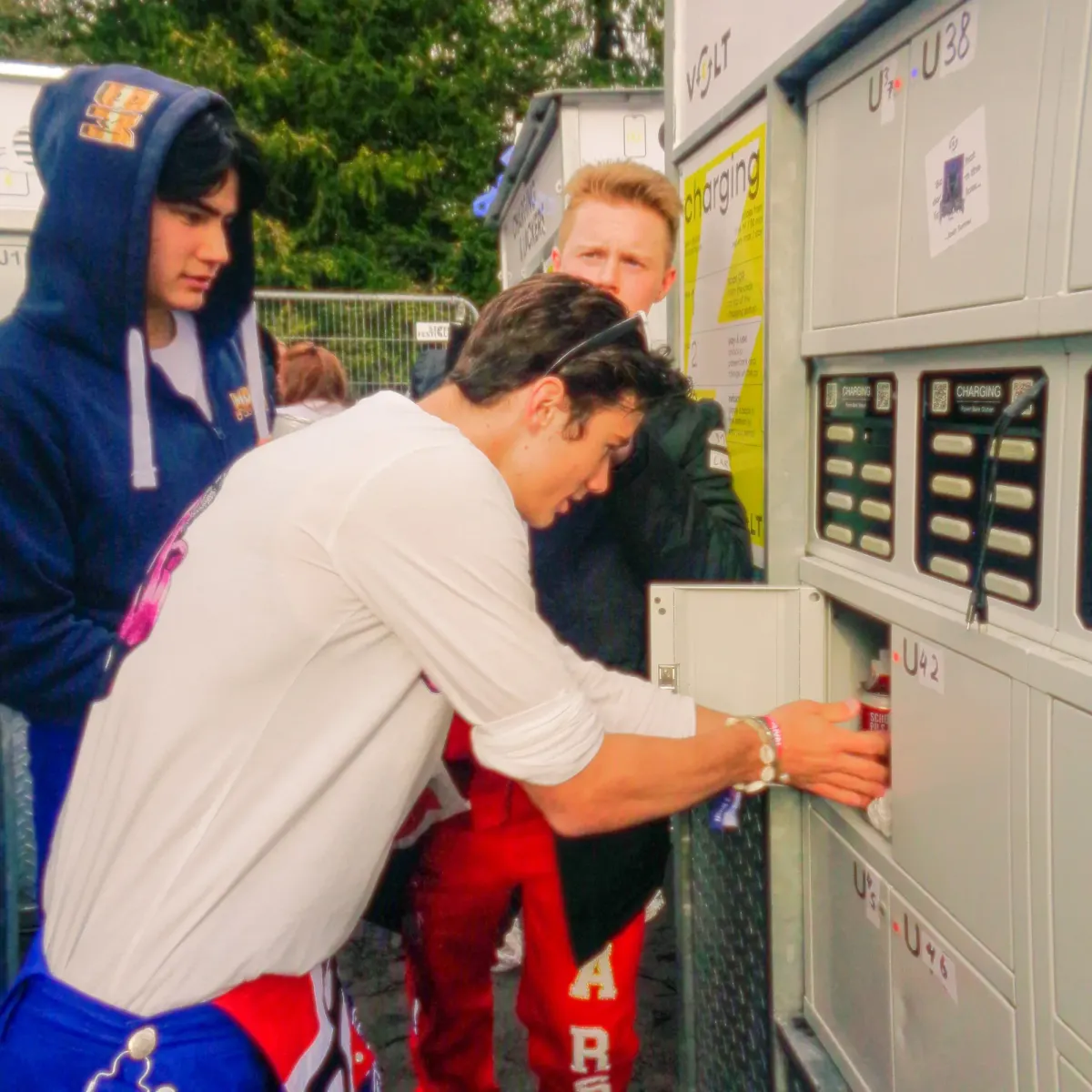
A few years ago the charging tent was standard at bigger festivals: a marquee full of extension leads, a queue of phones on the floor and a crowd of anxious festival goers watching the percentage tick up. Most events have moved on from that. The swap station replaced the tent, and the reasons come down to three practical problems with the old model. Here is why the shift happened and what it means for charging at your next camping festival.
What the charging tent actually was
The format was simple. A festival would set up a marquee near the campsite or main stage area, run power from a generator, and fill it with long extension leads and multi-socket adapters. Festival goers queued, plugged in, and then faced a choice: stand there for 45 minutes while the phone charged, or leave it on the floor with strangers walking past.
For the first era of smartphone festivals this was better than nothing. Phones were less camera-dependent and most people used them mainly to find friends and check set times. The problem came when smartphones became the central device at an event: cashless payment, photos, maps, social sharing and torchlight all draining the same battery simultaneously.
Three reasons the tent model stopped working
Leaving your phone unattended
The charging tent asked festival goers to leave their primary payment device, their digital ticket and their camera on the floor of a shared tent for 30 to 60 minutes. Research published by FestivalPro found that reluctance to leave phones unattended was one of the main reasons festival goers avoided on-site charging services entirely. The tent required exactly that.
Queue bottlenecks at peak time
Charging demand at festivals does not spread evenly across the day. It spikes in the evening when cameras have been running and batteries are critical. Around 67% of festival goers recharge at least once during an event, and 50% experience a completely dead battery at some point. When that wave hits a fixed tent with a limited number of sockets, the queue becomes the attraction rather than the stage.
Power infrastructure at scale
Running hundreds of devices off a single source requires careful electrical planning. Daisy-chaining extension leads is a standard approach in a tent setup, but exceeding capacity on a multi-socket adapter is one of the most common causes of electrical fires in consumer settings. A marquee packed with festival goers, heat and maximum-draw devices is not an ideal environment for improvised cabling.
How the swap station works differently
The swap model solves all three problems without adding friction for the festival goer.
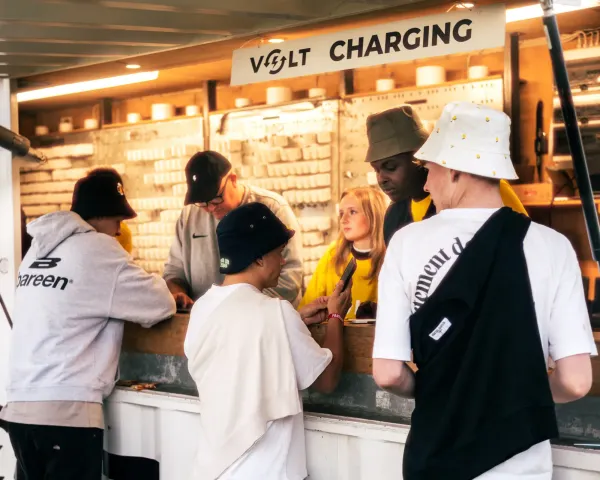
With the Volt Charging Service, you collect a Volt-Charger (the rental powerbank) from a staffed Volt booth when you arrive. You keep it in your pocket or bag all day. When it runs low, you bring it to any Volt booth and swap it for a fully charged one, once a day included in your pass. At the end of the festival you hand it back and receive your deposit. Nothing is left on the ground and there is no queue to sit through.
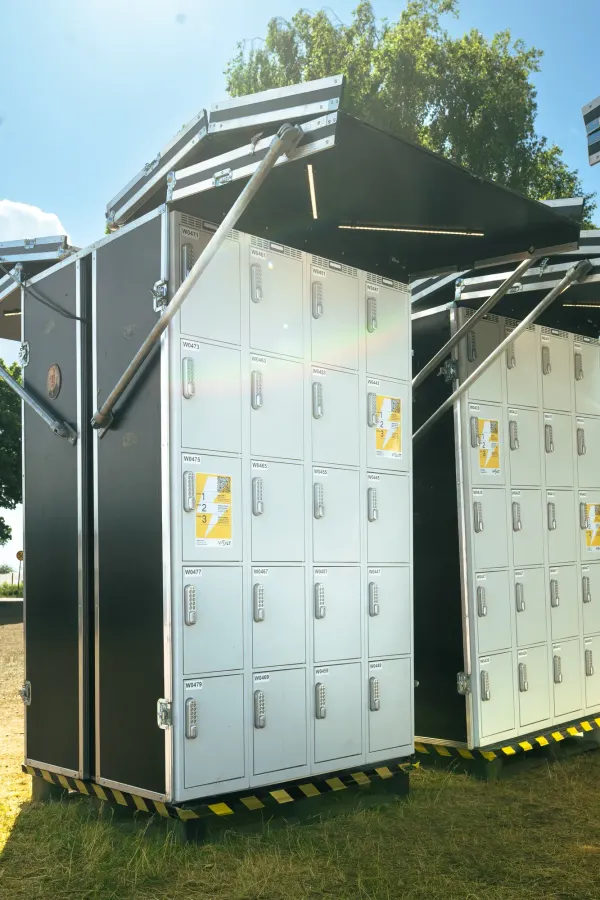
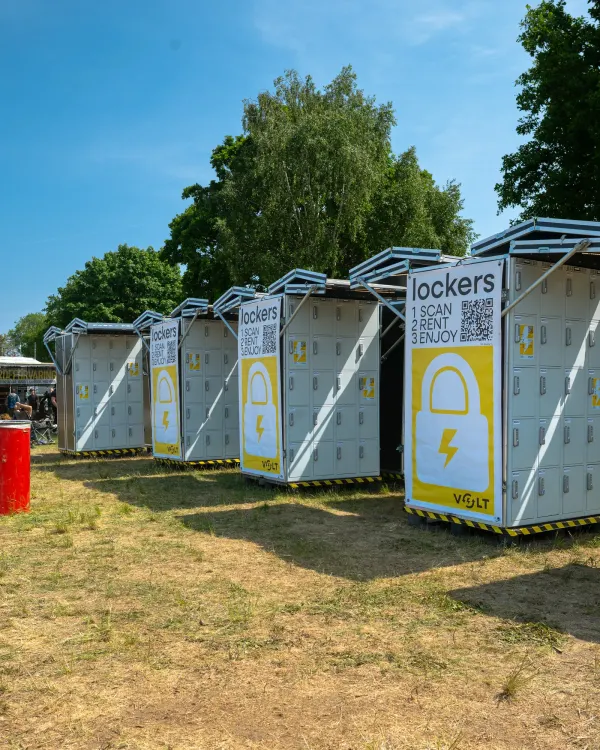
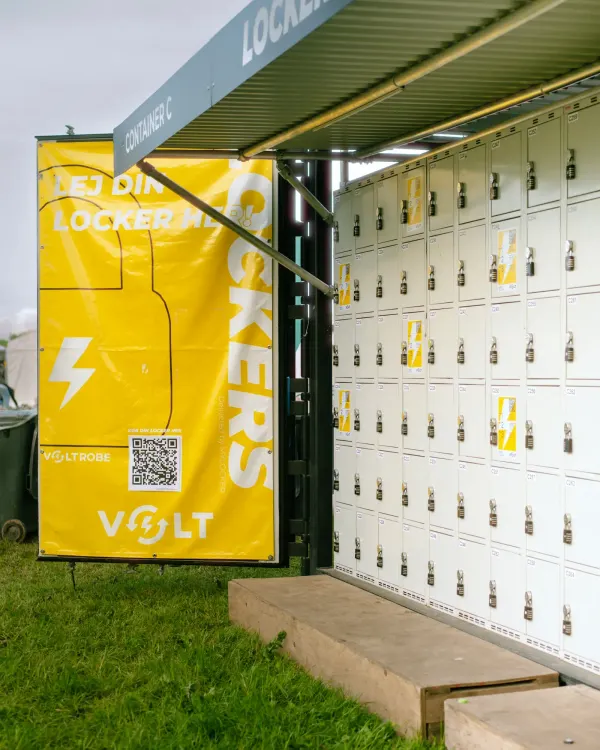
For locations within the festival site where a staffed point is not present, Volt Self-Service Charging stations work the same way: walk up, take a charger with three built-in cables for all connectors, use it, return it to any station when done. No app to download. No waiting for your own device to reach a percentage you are comfortable walking away from.
The staffed over-the-counter charging point also lets festival goers rent cables on their own, which covers those who prefer using their own phone rather than a dedicated rental powerbank.
Why your phone needs so much charge at festivals
Understanding the problem helps explain why the portable model works better than a fixed tent.
Weak mobile signal is the biggest single drain. When tens of thousands of people are competing for the same cell tower, your phone ramps up transmit power to maintain a connection and keeps trying even when signal is congested and patchy. Screen brightness outdoors runs near maximum. The camera is one of the most power-hungry functions on any smartphone, and uploading photos over a congested network compounds the drain further. The result is that a phone starting the day fully charged can reach critical levels well before the headliner.
A swap station works because you carry the charge with you rather than chasing a fixed socket when the battery finally gives out. For more on why phones drain so quickly at festivals, the full breakdown of the main causes covers each one in detail.
What the shift looks like in practice
The move from charging tent to swap station was not overnight. At larger festivals it happened over several years as organisers saw that rental services (which carry no sunk infrastructure cost for the event and are set up and removed by a specialist operator) handled demand spikes without the queue bottleneck or the security problem.
Volt has operated at over 120 festivals and events across Europe and served more than 1 million customers since 2012. That track record exists partly because the model removes the two choices that made charging tents unpleasant: stand and wait, or walk away and hope.
What this means at your next festival
If Volt is on site at your event, the Volt Charging Service comes with two options: a swap pass (pay once, swap for fresh power across the whole festival) or pay per use (one rental for as long as you need it). Which works better depends on how many days you are going and how much you plan to use your phone. The swap pass versus pay per use breakdown covers which makes more sense for different festival plans.
If Volt is not at your event, bring a quality powerbank with enough capacity for your phone. A 20,000mAh bank can fully charge most phones four to five times over a camping weekend, which covers most festival goers without needing to find a socket at all.
Frequently asked questions
Why did festivals stop having charging tents?
Charging tents required festival goers to leave their phones unattended while they charged. That created security anxiety, long queues during peak demand, and complex electrical setups with limited sockets. The portable powerbank swap model removes all three by letting festival goers carry their charge with them and exchange a depleted powerbank for a full one in under a minute.
How does festival phone charging work now?
At most events with a professional charging operator, you rent a powerbank from a staffed booth or a self-service charging station, keep it in your pocket all day, and swap it for a fully charged replacement when needed. You return it at the end of the festival and collect your deposit.
Do I need to queue to charge my phone at a modern festival?
With a swap station model you do not wait for your phone to charge on a wall. You exchange a depleted powerbank for a full one at any Volt booth, then carry on with the rest of your day. The transaction takes under a minute.
Can I still use my own powerbank at a festival?
Yes, and most festival goers do. Most events allow powerbanks up to 100Wh in capacity. If yours runs out, hand-in charging lets you drop off your own device or powerbank at a staffed point and collect it fully charged later. See the Volt charging service overview for all available options at events where Volt operates.
Are charging tents still a thing at any festivals?
A small number of smaller or community events still run basic wall-socket points, but the staffed marquee full of extension leads is largely gone from major festivals in Northern Europe. Swap stations, where festival goers carry their charge rather than being tethered to a socket, are now standard at events with a professional charging operator.