Festival Sponsorship Ideas: The Inventory You Already Own
Charging points and Event Lockers are the sponsor inventory most festivals still run as a cost line. See what three named festivals already sell, and how.

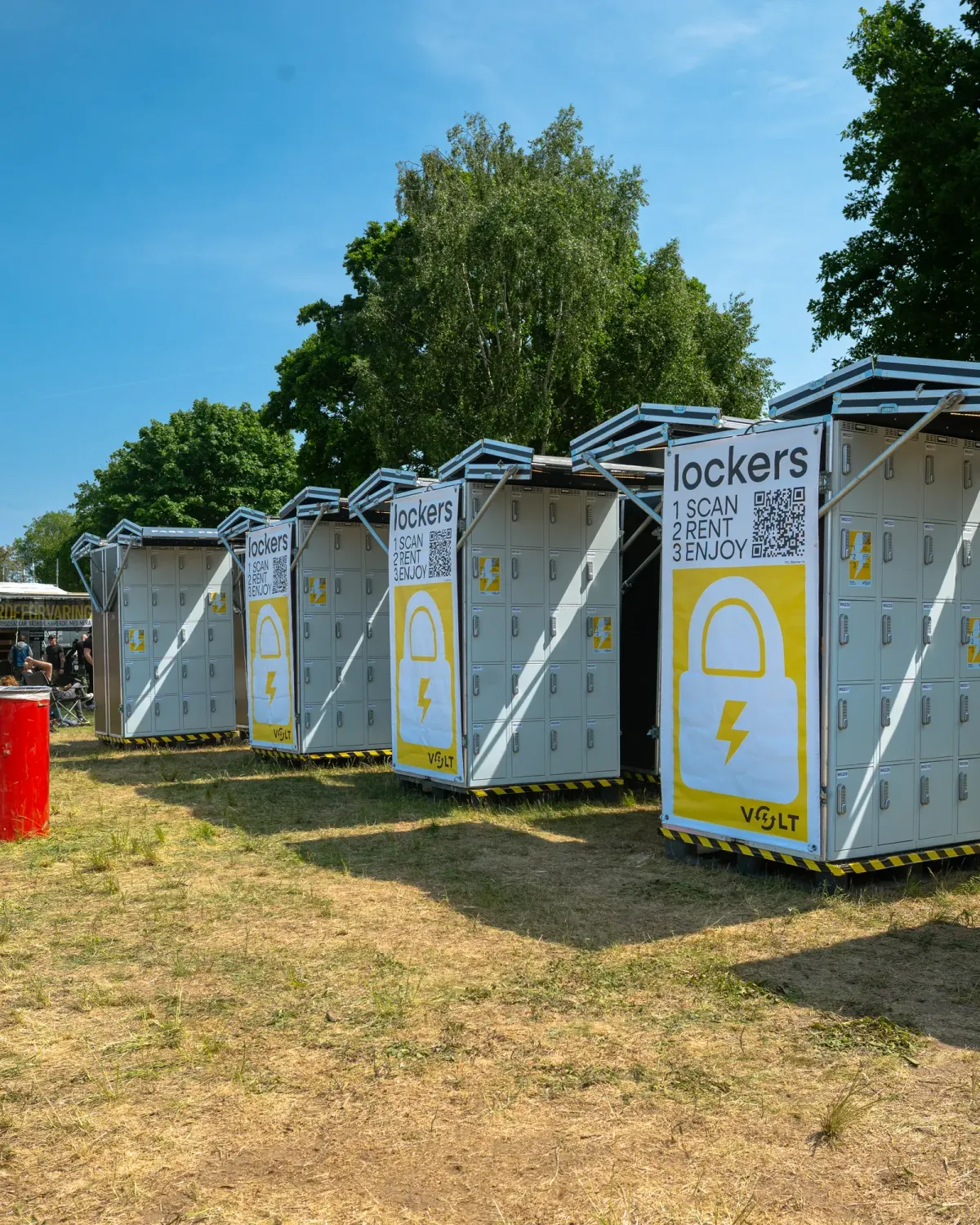
If a sponsor asks what you can offer beyond a stage banner and a logo on the wristband, the honest answer is sitting in your operations budget. Charging and storage are the only things on your site a festival goer walks to on purpose, waits at, and comes back to. Most festivals run them as a cost line. A few sell them as partner inventory, and they publish exactly what that looks like.
Three festivals already do this, and they say so on their own websites
This is not a theory. It is on the practical-info pages of festivals you know.
Smukfest sells its charging surface to its energy partner. The festival's own practical page describes charging furniture in the forest: "Der er rundt på selve festivalpladsen opsat bord/bænkesæt med indbyggede mobilopladere," table and bench sets with built-in phone chargers around the festival site, under the heading "AURA ladestationer." The page adds that it costs the festival goer nothing. On Smukfest's partner page, AURA appears as the "officiel energi-legekammerat," the official energy partner, and the description points straight back at the furniture: "Du møder bl.a. AURA Energi på vores oplader-bænke rundt i skoven." The sponsorship did not buy a banner. It bought a bench people sit on when their phone is dying.
The same festival does it with water. Grundfos, a pump manufacturer, is listed on the same partner page with this: "Mød Grundfos ved Danmarks største vandhane på KærligHeden." Meet Grundfos at Denmark's largest tap. The partner is the thing the festival goer queues for.
Roskilde publishes service suppliers as partners, not as vendors. Its partners page lists Tuborg and Meyer Sound and Andel and Nordisk and Volt in one list. Sound, energy, camping equipment and charging sit in the same place as the beer. There is no separate page for "suppliers we pay" and "brands that pay us."
Compare that with Copenhell's partner page, which lists its partner brands in one grid and describes what none of them actually do on site. That is the default across the industry, and it is the gap: the festival has the inventory, the sponsor has the budget, and nobody has written down what the asset is.
What a service gives a sponsor that a banner does not
A banner is seen by someone walking past on the way to something else. A charging point is the something else. The difference matters in three concrete ways.
The festival goer chose to be there. Nobody walks across a site to look at signage. They walk across a site because their phone is at four percent and their ticket, their bank card and their group chat all live inside it. That is the moment the logo arrives.
The sponsorship pays for something people wanted. This is the honest version of the "brand activation" pitch. An activation that hands out branded sunglasses is a cost the festival goer tolerates. An activation that charges their phone is a service they would otherwise have paid for or gone without. Smukfest's line about the charging benches costing nothing is the whole mechanic in five words.
Dwell is built in. A powerbank stays with a festival goer for hours or days. A locker gets opened and re-locked repeatedly across a weekend. Both put the brand in a repeat loop rather than a single pass.
What we will not do is put a number on any of that. There is no published, checkable figure for what a charging sponsorship returns to a festival, and the ones circulating in supplier marketing do not carry a source. Volt does not publish one either. If a vendor quotes you an uplift percentage, ask them where it came from before you put it in a board paper.
The four formats you can actually sell
These are the formats Volt builds today, and they are described in full on the for-brands page and in the piece on how branded sleeves work on charging hardware, which covers the production and creative side in detail. This section is the commercial shape, not the mechanics.
| Format | What the sponsor gets | Best fit |
|---|---|---|
| Branded sleeves | Sponsor-printed sleeves on the powerbanks the festival goer carries around the site | A brand that wants reach and repetition across the whole event |
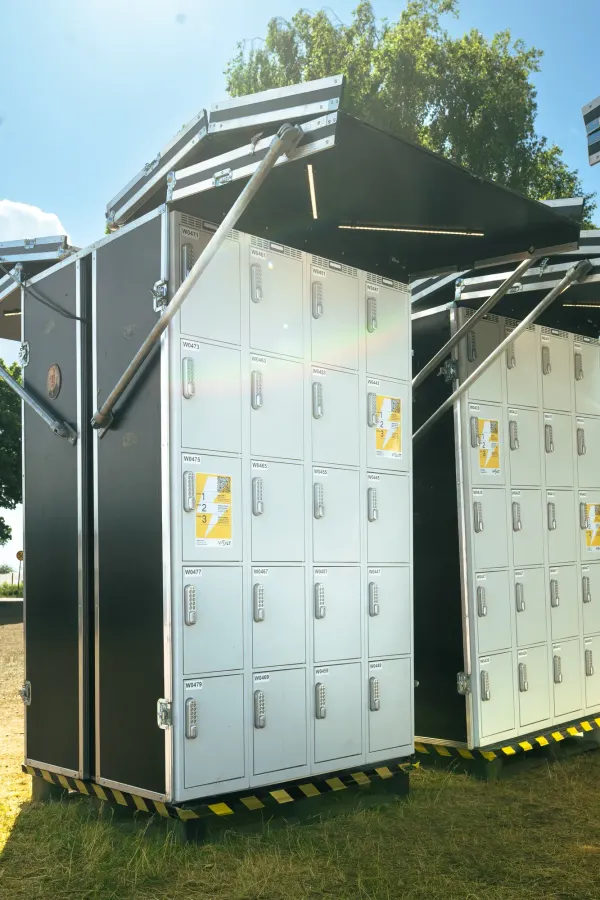
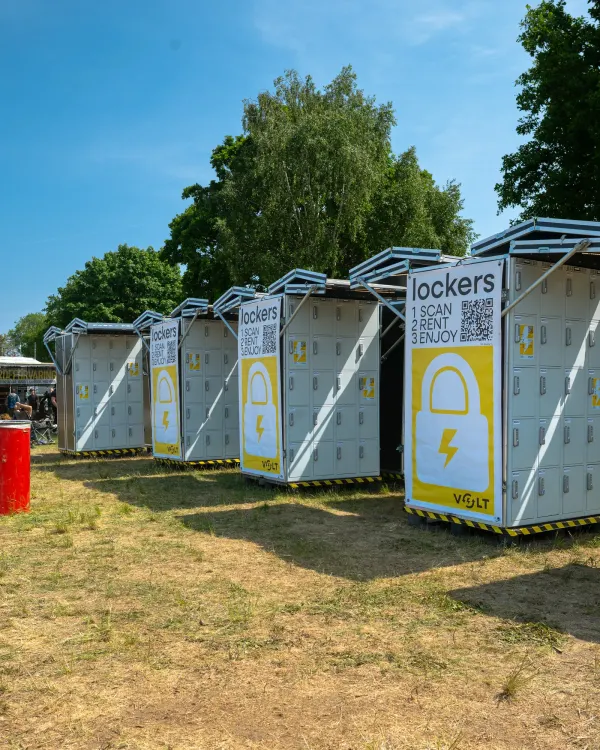
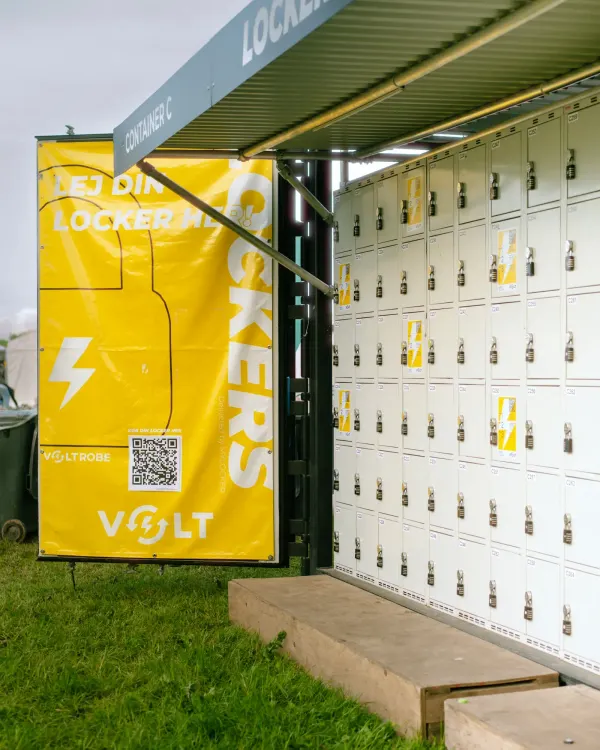
| Co-branded Event Lockers | Full-surface wrap on the locker bank itself. The Cubic Locker carries a brandable top fascia and side panels as standard | A brand with a message about safety, security or looking after your things |
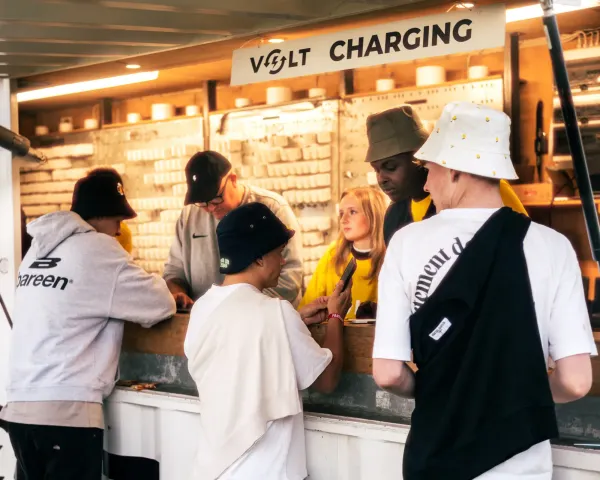
| On-site activation | A built and staffed charging or storage point run as the brand's own space | A brand that wants a destination rather than a surface |
| White label | The whole operation runs under the brand's or the event's name. It looks like theirs, it runs like ours | A title partner, or a festival that wants the service to read as its own |
The clearest public example of the second one is Visa as Official Partner at Heartland 2024, where the co-branded Event Lockers carried the line "These lockers will keep you protected from losing your stuff. Visa protects you from fraud." The message and the asset are the same idea. That is the test of a good fit: if the sponsor's copy only works because of what the hardware does, you have matched them correctly.
Which sponsors fit, based on what festivals have actually signed
The pattern in the live examples above is narrow and useful. An energy company took the charging furniture. A pump manufacturer took the water taps. A payments company took the lockers. In each case the sponsor's own category explains the asset without a paragraph of justification.
So the shortlist worth calling first is the one where the product and the service rhyme: energy and utilities for charging, financial services and insurance for storage, telecoms for anything that keeps a phone alive, and travel or transport for the lockers people use on arrival and departure day. The awkward fits are the ones where the brand has to explain why it is there, which is also where the activation ends up needing extra staff and extra signage to make sense.
What to put in the prospectus, and what to leave out
An organiser selling this for the first time usually asks what the asset description should say. Keep it to things that can be checked on site:
- Where it sits. Inside or outside the main gate, which camp areas, which entrances. Position is most of the value and it is fully verifiable.
- How many units, and of what type. Staffed points, self-service stations, locker banks. A Volt Locker Container holds 296 lockers; flightcase modules run around 40 each. These are countable.
- Hours. When the point is open, and whether it opens before the gates or after.
- Whether it is free or paid for the festival goer. This changes the sponsorship entirely. A free service reads as a gift from the brand. A paid one reads as a service the brand has put its name on.
- Branding surface. Sleeve, wrap, fascia, screen. Say which, and say the production deadline, because artwork always arrives late.
Leave out impressions, uplift and return on investment. You cannot verify them before the event, the sponsor's own agency will discount them anyway, and the one thing that makes this inventory credible is that everything about it is physically checkable.
Where this sits next to the rest of your commercial stack
This is additive, not a replacement. The services still run whether or not a sponsor pays for them, which means the downside case is the operation you were going to run anyway. What changes is that a cost line becomes a negotiable asset, and that the festival goer's experience improves rather than getting one more logo pointed at it.
Two adjacent pieces are worth reading alongside this one. A bag policy is only as good as where the bags go covers why storage has to be named as a destination in your own rules, which is the same discipline applied to the ops side. Cashless festivals made charging part of the payment system explains why the charging point became load-bearing infrastructure in the first place, which is the reason a sponsor's name on it carries weight now and did not ten years ago.
FAQ
What can a festival offer a sponsor besides signage?
The services festival goers use on purpose. Charging points, Event Lockers, water, cloakrooms. Smukfest publishes branded charging benches from its energy partner and a branded water tap from a pump manufacturer on its own partner page, which is the clearest public example of the pattern.
Is charging sponsorship better than a stage banner?
It is different rather than strictly better. A banner buys visibility to people passing. A charging point buys a brand's name on a service somebody walked to and waited at. There is no published, sourced figure comparing the two, and any supplier quoting one should be asked for the source.
How do you brand a locker or a powerbank?
Four ways. Sponsor-printed branded sleeves on the powerbanks, a full-surface wrap on the locker bank, a built and staffed on-site activation, or a white label operation running under the partner's name. The Cubic Locker has a brandable top fascia and side panels built into the hardware.
Should the sponsored service be free to the festival goer?
That is a commercial choice, not a rule. Smukfest's AURA charging benches are free and its Volt Charging Service is paid, and both run at the same festival. Free reads as a gift from the brand, paid reads as an endorsement of a service. Decide which one the sponsor is buying before you price it.
What return should we promise a charging sponsor?
Nothing you cannot verify on site. Promise position, unit counts, opening hours and branding surface. Do not promise impressions, dwell-time uplift or a return-on-investment figure, because no checkable public source for those exists in this category.
The next step
Walk your site map and mark every point where a festival goer stops moving because they need something. Those are your assets. Volt runs charging and storage at over 120 festivals and events, and the charging and Event Lockers service pages set out what can be branded and how. If you want to work out what your own site could carry, talk to us through the organiser page.