Green Festival Roadmap 2030: who owns the 201 actions
The Roadmap's action plan has a Responsibility column and never says who to put in it. All 201 actions sorted by the festival department that owns the work.


The action plan spreadsheet published alongside the European Green Festival Roadmap 2030 has a column headed Responsibility. It is empty, and nothing in the 41 page Roadmap tells you who to put in it. That blank column is where most festival sustainability plans quietly stall.
So we sorted all 201 actions by the department that actually has to do the work. The short version: your sustainability lead owns 23 of them. Your production and site team owns 76. Another 33 sit with traders you do not employ.
The split
| Who owns it | Actions | Share | What lands on their desk |
|---|---|---|---|
| Production, power and site | 76 | 38% | Energy plan, metering, efficiency, green energy, e-waste, litter, waste sorting, all of Water, site protection |
| Bar, catering and traders | 33 | 16% | The entire Food & Beverage area: policy, sourcing standards, food carbon footprint, food waste, redistribution, disposal |
| Sustainability lead | 23 | 11% | Strategy, legal register, stakeholders, certification, measurement, environmental baseline |
| Community and safety | 19 | 10% | Neighbours and local hiring, safety and traffic plans, biodiversity work |
| Marketing and comms | 16 | 8% | Internal and external communication, and every visitor travel action |
| Procurement | 14 | 7% | Minimising waste at the buying stage, extending the life of materials |
| Transport and logistics | 13 | 6% | Transport policy, crew and supplier travel, production transport |
| Finance | 7 | 3% | Funding the programme, green fees, ethical banking, reinvestment |
One caveat before you quote these numbers. The Roadmap does not assign departments, only its own seven action areas. The mapping above is ours, done at the level of the Roadmap's 36 group headings rather than guessed action by action, so every action in a group travels with its group. Your org chart will differ. The point is the shape, not the decimal.
Three things the split tells you
1. This is not a sustainability manager's project
Eleven percent of the plan sits with the person whose job title says sustainability. The other 89% belongs to people who already have a festival to build. If your programme lives or dies with one coordinator, it is going to die, and the Roadmap says as much in its own Strategy section: the entire festival team should be involved, and everyone should get their own target areas.
The realistic reading of the sustainability lead's 23 actions is that they are almost all coordination and measurement. Strategy, the legal register, certification, the baseline, the monitoring. That is a function that makes other departments' work countable, not a function that does the work.
2. A sixth of your plan is in someone else's contract
All 33 Food & Beverage actions land on caterers, bars and traders, and at most events those are third parties on a concession agreement. You cannot instruct your way to compostable serveware in July if the trader handbook went out in March without it.
The Roadmap has already noticed this. Its Food & Beverage section asks you to write a Food & Beverage Charter for agreement with all external caterers, send out a trader handbook, and hold meetings or webinars with traders before the event. In practice that means your Roadmap deadline is your contracting deadline, not your event date. Miss the tender window and 16% of the plan waits a year.
3. Production carries almost twice the load of anyone else
Seventy six actions, spanning power, waste, water and site protection. Energy alone is where the Roadmap's own cited IPCC figure is heaviest, at 34% of global greenhouse gas emissions from energy generation.
If you take one scheduling decision from this article: get your production and site lead into the room the day you start writing the strategy, not at the point where you present it. They own more of the outcome than anyone in the building.
Department by department
Production, power and site (76)
Everything in Energy except the trader metering conversation, all of Water, and the waste actions that happen on the ground rather than at the purchase order. Highlights worth pulling forward: create an Energy Management Plan with SMART targets, build a current energy baseline per area, remove diesel generators in favour of sustainable fuels or renewable generators, connect to the grid on a green tariff, and set up dedicated safe storage for hazardous waste including WEEE, lightbulbs and batteries.
Water is quietly enormous here at 24 actions, from drinking water points and leak checks through to waterless urinals, greywater reuse and reed beds.
Bar, catering and traders (33)
Write the Food & Beverage Policy first, because six of the other actions reference it. Then the Charter and the handbook, then the trader meetings. Sourcing standards, the food carbon footprint request to traders, food waste prevention, donating surplus to food banks, and correct organic waste disposal follow from those documents.
Sustainability lead (23)
Scope, vision, purpose, goals, KPIs, baseline. The legal register. Whether to pursue AGF Certification, ISO 20121, ISO 14001 or EMAS. The environmental baseline survey before the site build. Treat this as the department that makes everyone else's work measurable.
Community and safety (19)
Neighbour communication and a named person who answers complaints, advertising temporary jobs locally first, free tickets for close neighbours, traffic management, emergency plans that account for flooding and fire, and biodiversity work including habitat clean-ups and a Phase 1 Habitat Survey.
Marketing and comms (16)
The six communication actions plus all ten visitor travel actions, because reaching the audience about how to arrive is a comms job before it is a transport job. This is also where the Roadmap asks for progress reports and dashboards, and where it asks you to communicate sustainability in a way that encourages rather than lectures.
Procurement (14)
The buying-stage half of Materials & Waste. Buy less, buy used, buy things with a long service life, choose EU Ecolabel products, ban single-use plastics by policy, and reuse, share, rent or donate material rather than owning it. That last action explicitly includes electronic material.
Transport and logistics (13)
Transport policy and travel surveys, crew and performer travel, and production transport. Air travel is named as an absolute last resort.
Finance (7)
Small in count, decisive in effect. Budget the programme separately, look for grants, consider green fees reinvested into sustainability management, check whether your bank and staff pensions match your environmental policy.
How to actually fill in the Responsibility column
- Download the action plan spreadsheet from YOUROPE.
- Assign an owner per group heading, not per action. There are 36 groups and 201 actions, and the groups already travel together.
- Give each owner their slice as their own list, with the Start Date and Deadline columns filled against your production calendar rather than the calendar year.
- Put trader-facing actions on the contracting timeline, not the event timeline.
- Run the 201 action self-assessment once as a whole team to find where you already stand before anyone is given a deadline.
Where a service supplier fits
Worth saying plainly: none of the 201 actions name a supplier, and a festival that runs everything in house scores the same as one that contracts it out. What a supplier changes is which column the work sits in.
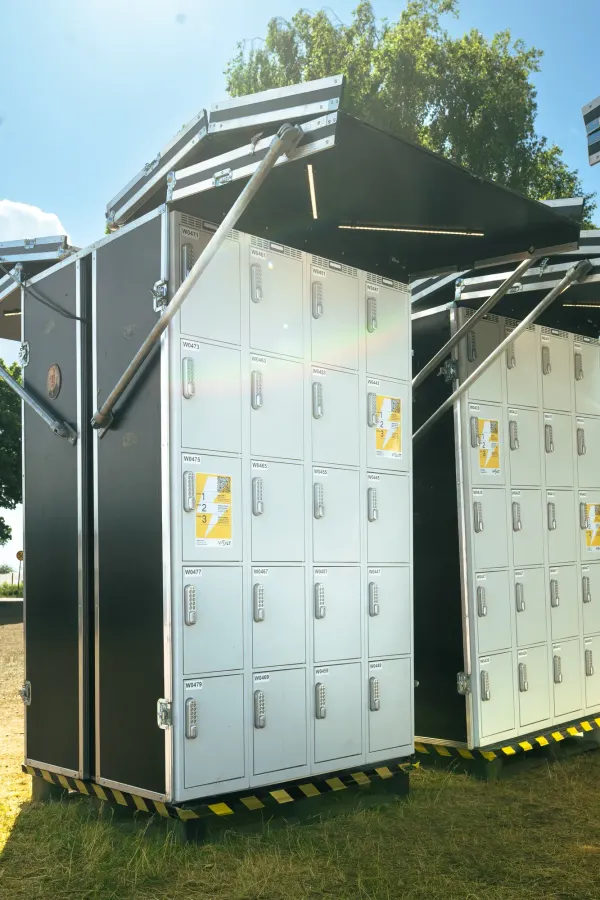
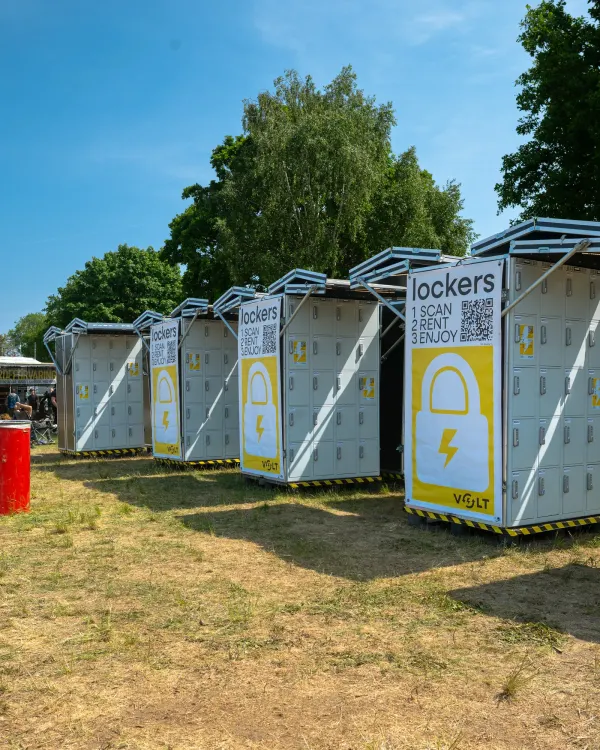
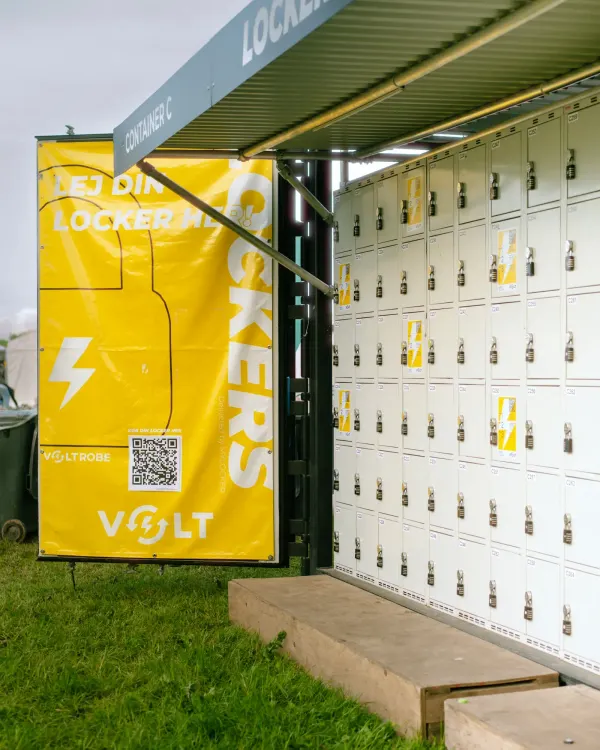
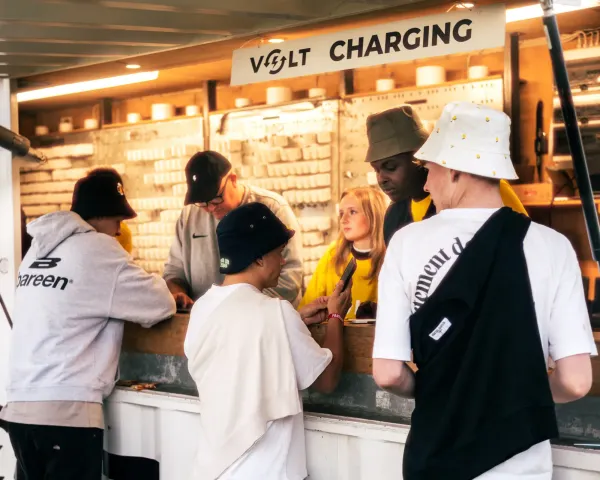
Charging and storage is a small example of the pattern. Those services touch the Procurement action on renting and sharing electronic material, the Energy actions on e-waste and batteries, and the Marketing actions on visitor travel, since app-based transport information only reaches a festival goer whose phone is alive. When the hardware belongs to a supplier who takes it away again, those actions move off your production team's list and onto a contract. That is a scheduling win, not an emissions win, and it is worth being precise about which one you are claiming in a report.
The fuller version of that argument, including what charging and storage will not do for your numbers, is in our organiser's guide to the Roadmap.
FAQ
Does the European Green Festival Roadmap 2030 say who is responsible for each action?
No. The action plan spreadsheet has a Responsibility column, but the Roadmap leaves it to each festival to fill in. It only groups actions into seven action areas and 36 group headings. The department mapping in this article is our own reading, applied at group level.
How many actions are in the Green Festival Roadmap 2030 action plan?
201 individual actions, arranged in 36 groups across seven action areas: Strategy, Energy, Materials & Waste, Food & Beverage, Travel & Transport, Water, and Community & Biodiversity.
Which department owns the most Roadmap actions?
Production, power and site, with roughly 76 of the 201. That covers the Energy area, all of Water, on-the-ground waste handling and site protection. The sustainability lead directly owns about 23, mostly strategy and measurement.
Why should trader actions run on the contracting timeline?
Because all 33 Food & Beverage actions depend on people you do not employ. The Roadmap asks for a Food & Beverage Charter, a trader handbook and pre-event trader meetings, and none of those can be imposed after concessions are agreed. If your tender closes before the sustainability plan exists, that 16% of the plan slips a full year.
Do we need a full-time sustainability manager to work through the Roadmap?
The Roadmap does not require one, and 89% of the actions sit outside that role anyway. What it does require is that someone owns strategy, measurement and the baseline, and that the people given the work receive time, resources and a clear mandate. The Roadmap's Strategy section says the work must be embedded into daily operations or it will not get done.
Next step
Take the split above, put names against the eight owners, and run the self-assessment as a team before anyone commits to a deadline. If you want to talk through the supplier-side actions, including what to ask a charging or storage partner about power source and hardware return, we are at hello@getvolt.dk.