What do Scope 1, 2 and 3 emissions mean for a festival?
Scope 1 is a festival's own emissions, Scope 2 its purchased power, Scope 3 everything else. The GHG Protocol split, with a real worked emissions example.

Scope 1 is what your festival owns and burns directly. Scope 2 is the electricity it buys. Scope 3 is everything else running through the gates: festival goers' travel, your suppliers' emissions, and your waste once it leaves site. That three-way split comes from the GHG Protocol, the accounting standard that Yourope's European Green Festival Roadmap 2030 uses to structure its own carbon-footprint chapter. Here is what each bucket actually holds, worked through with the Roadmap's own numbers.
Where the three-scope split comes from
The GHG Protocol's Corporate Accounting and Reporting Standard is the tool practically every greenhouse gas reporting programme in the world builds on. It splits emissions sources into three categories based on where they physically occur, not on who pays the bill or who benefits.
The European Green Festival Roadmap 2030, published by Yourope with A Greener Future and Greener Events Norway, borrows that same structure for its "Calculating CO2 Emissions" chapter. No EU law forces a festival to report scope by scope. The Roadmap adopts the framework anyway, because you cannot prioritise what you have not measured.
Scope 1: what the festival owns and burns
Scope 1 covers direct emissions from sources your festival owns or has under its own control. In the Roadmap's own breakdown, that means:
- Vehicles the festival owns, rents or leases for the event: cars, mini-buses, production machinery.
- Fuel generators on site, whether diesel or an alternative fuel.
- Gas used for on-site cooking.
This is usually the shortest list of the three, and the one a festival has the most direct power to change: swap a generator, retire a diesel van, switch a cooking fuel.
Scope 2: the power you buy
Scope 2 is narrower again: indirect emissions from energy your festival purchases rather than generates itself. In practice that is mains power drawn onto the site, district heating or cooling where it applies, and any electric vehicles charged from that grid connection.
If your site plugs stages, lighting rigs or vendor points into the local grid instead of running them off diesel, those emissions move from your Scope 1 tally into Scope 2. The activity looks the same to the festival goer standing next to it. The accounting is not.
Scope 3: everything else running through the gates
Scope 3 is the broadest bucket and, for most events, the hardest one to see the edges of. It covers emissions your festival does not own or directly control but that still exist because your event happened:
- Festival goers' own transport to, from and around the site.
- Performer travel, including flights.
- Suppliers' and vendors' transport, plus the goods and services they bring: food, hired technology, staging, installations.
- Waste once it is collected, sorted and hauled off site, plus deposit-return handling and sewage.
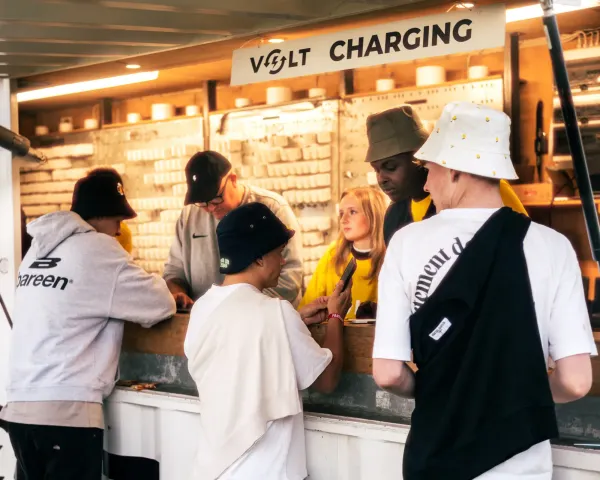
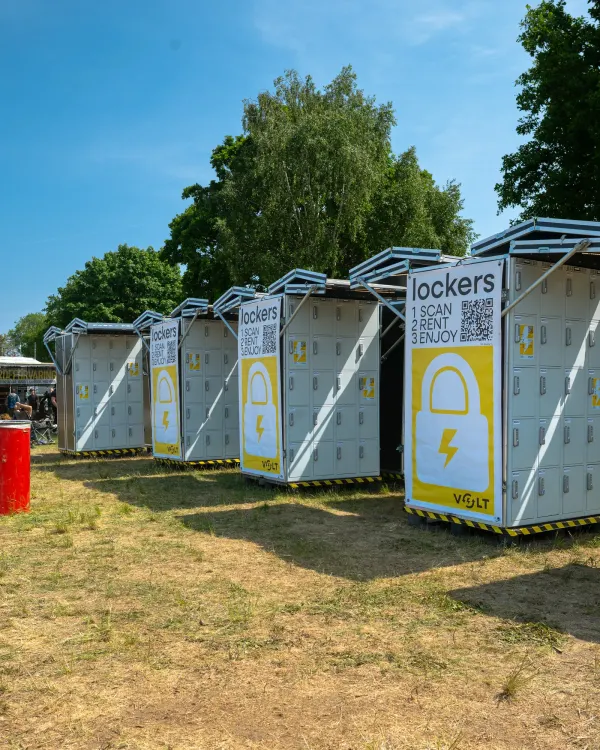
A hired charging, storage or sound service running on your site's own power falls here too, not in your Scope 1 or 2, even though the electricity it draws is still counted in your Scope 2 total. The vendor's presence is a Scope 3 line for you; the power that runs it is a Scope 2 line, separately. That split is exactly why the Roadmap keeps "purchased and hired materials, technology, installations" as its own line under Scope 3, distinct from purchased energy under Scope 2.
The worked example: a food stall's cooking gas
The Roadmap illustrates the whole calculation with one line item: a food stall's gas use, which sits under the Scope 1 "gas for cooking" category. The method is a simple multiplication:
Emissions (CO2eq) = activity data × emission factor
Their example: gas used for cooking emits 0.244 kg of CO2eq per kilowatt hour, the emission factor for that fuel. A festival food stall uses 20,000 kWh of gas over the course of the event, the activity data for that stall.
20,000 × 0.244 = 4,880. So that single stall's cooking gas emits approximately 4,880 kg of CO2eq for the event, all of it landing in the festival's Scope 1 column because the gas is being burned directly, on site, for the festival's own catering operation.
Run that same multiplication against every generator, every rented van and every gas burner on your site, and you have a real Scope 1 total, not a guess.
Why the split is worth doing, not just reporting
The Roadmap frames measuring your footprint as an ongoing exercise, not a one-off report: track it year on year and you can see which activities carry the most weight and where a reduction effort actually pays off, rather than spreading effort evenly across everything. Scope 1 tends to be the fastest place to start, since you control it outright. Scope 2 usually follows, through the power contract you sign. Scope 3 takes longer, because it depends on choices your festival goers, performers and suppliers make, not just your own.
None of this requires you to have a finished sustainability plan before you start. It requires you to know which bucket each emission source sits in, so the next action you take actually moves a number you can point to.
FAQ
Which scope covers festival goers' own travel to the event?
Scope 3. Audience transport is emissions your festival does not own or control directly, so it sits in the same value-chain bucket as performer travel, supplier transport and waste handling.
Does a festival have to report on all three scopes?
No. The European Green Deal sets an EU-wide target but leaves it to individual countries and sectors to regulate, and there is no direct EU rule requiring festivals to report scope by scope. The Roadmap uses the GHG Protocol's three-scope structure by choice, because it is the standard almost every other GHG reporting programme already runs on.
Which scope should a festival tackle first?
Scope 1 is the usual starting point, since a festival owns or directly controls those emission sources: its own generators, owned or rented vehicles, cooking gas. Scope 2 follows through the power contract. Scope 3 is the largest bucket for most events and the slowest to shift, since it runs through festival goers, performers and suppliers rather than the festival's own operations.
What does CO2eq mean?
Carbon dioxide equivalent. Greenhouse gases include methane, sulphur dioxide, nitrous oxide and fluorinated gases alongside CO2 itself. Because CO2 is the dominant gas, the others are converted to their CO2 equivalent so a festival's whole footprint can be expressed as one comparable figure.
If you are working through your festival's own footprint, the organiser's guide to the full Roadmap and the 20 actions you can start this season are the natural next steps, along with a look at who owns which of the 201 actions once you are ready to assign the work. If certification is next on your list, we have also compared AGF Certification against ISO 20121 and EMAS.
A hired charging or storage service is one small piece of your own Scope 3, the technology and installations line. If that is the part of the picture you are sizing up, Volt's charging service page has the specifics, or talk to us directly through Volt for organisers.